
Pollarding in Fordingbridge
Pollarding is a traditional tree management technique that has been used in the British countryside for centuries. It involves cutting a tree back to a main framework of branches, or to the main stem itself, on a regular cycle to control its size and encourage a dense head of new growth. Future Trees & Garden Maintenance carries out pollarding across Fordingbridge and the wider SP6 area on a range of suitable tree species. Our NPTC qualified arborists understand when and how to pollard a tree correctly, and we offer free same day quotes.
Home > Tree Service > Pollarding
More Information
Which Trees Can Be Pollarded
Not all trees are suitable for pollarding. Species that respond well include willow, lime, London plane, poplar, hornbeam and some fruiting trees such as mulberry. Oaks have historically been pollarded in ancient woodland management but this is less common today. Trees that are NOT suitable for pollarding include conifers, beech and most ornamental species, as they do not regenerate well after severe cutting. We will always assess a tree and tell you honestly whether pollarding is the right approach before any work is carried out.
The Pollarding Cycle
A newly pollarded tree will produce a flush of vigorous growth from the cut points. This new growth needs to be managed on a regular cycle, typically every three to five years for most species. If pollarding is left too long, the regrowth branches become heavy and poorly attached, which creates a structural risk. Regular pollarding keeps the regrowth light, manageable and well-distributed across the framework. We are happy to set up a recurring visit schedule for customers in the Fordingbridge area who want their pollarded trees properly maintained over the years.
Text placeholder
Pollarding for Practical and Aesthetic Reasons
Pollarding serves a number of practical purposes. It keeps willows and other vigorous species at a manageable size near water or in small gardens. It allows you to manage a tree that produces too much shade or leaf fall. It can also create a distinctive formal shape in larger gardens. In the Fordingbridge and Avon Valley area, we see a lot of riverside willows that benefit from regular pollarding to stop them outgrowing their space and posing a risk to bank stability.
ABOUT US
Future Trees & Garden Maintenance was founded over 20 years ago right here in the Fordingbridge area. What started as a small tree surgery business has grown into a full tree and garden maintenance service covering the SP6 postcode and beyond. We are proud to be NPTC qualified, which means our arborists meet the nationally recognised standard for safe and competent tree work. We have worked in back gardens in Breamore, along the lanes of Woodgreen, on large rural estates near Rockbourne, and on roadside trees throughout the New Forest fringe. We know this landscape well and we care about keeping it beautiful and safe.
NPTC qualified arborists on every job
20 years serving Fordingbridge and the SP6 area
Same day response for heating emergencies
Free, no-obligation quotes before work starts
Full public liability insurance on all works
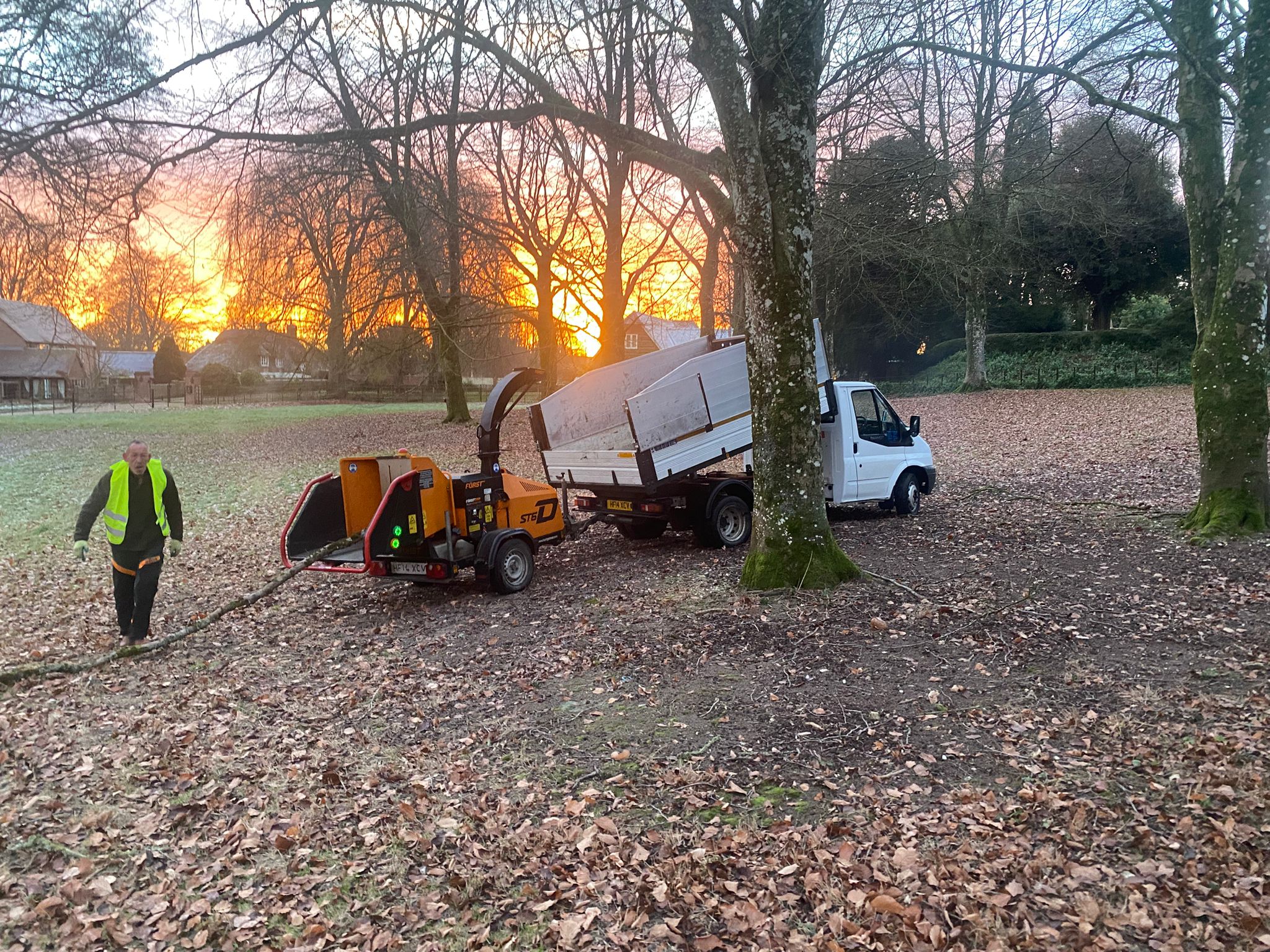
We carry out regular pollarding for a small estate near Rockbourne that has a line of old lime trees along its driveway. The limes were last pollarded before we took over the contract and had started to develop very heavy overhanging limbs. We restored the pollard framework over two seasons, bringing the trees back to a manageable size and shape. They now look exactly as formal limes should, and we return every four years to maintain them.
STILL NOT SURE?
Frequently Asked Questions
What trees can be pollarded in the Fordingbridge area?
In the Fordingbridge area the most commonly pollarded trees are willows along the Avon Valley, limes in formal gardens, and occasional poplars on field boundaries. Hornbeam and plane trees are also suitable. Future Trees & Garden Maintenance will assess your tree and advise whether pollarding is the right approach. Call 07401 310677 for a free same day quote.
Is pollarding harmful to trees near Fordingbridge?
Pollarding is not harmful when carried out correctly on suitable species at the right time of year and maintained on a regular cycle. It can actually extend the life of a tree by reducing the weight and wind loading on the canopy. Poorly executed pollarding, or pollarding of unsuitable species, can cause lasting damage. This is why using an NPTC qualified arborist in the Fordingbridge area is important.
How often does a pollarded tree need to be re-pollarded in the SP6 area?
Most pollarded trees in the SP6 area need attention every three to five years. Willows may need work more frequently due to their vigorous growth. Leaving pollarding too long causes the regrowth to become heavy and structurally weak. Future Trees & Garden Maintenance can advise you on the right cycle for your specific trees and set up a maintenance programme.
OUR REVIEWS
READY TO TAKE THE NEXT STEP?
t: 07401 310677
OPENING HOURS
Mon: 5am - 12pm
Tue: 5am - 12pm
Wed: 5am - 12pm
Thu: 5am - 12pm
Fri: 5am - 12pm
Sat: 5am - 12pm
Sun: 5am - 12pm
SERVICE AREAS
Fordingbridge
Ringwood
Verwood
Hale
Alderholt
Hampshire
Dorset
© Copyright 2026. Future Trees & Garden Maintenance. All rights reserved.
Address: 11 Lower Bartons, Fordingbridge, SP6 1JA